









At the end of the line, backpackers give their essential Interrail tips
Conor Capplis
3 October 2025

Portbou, located on Spain's Costa Brava, is the last town before the French border.
On a rainy afternoon in Catalonia, a northbound train steadily loses passengers as they alight for Girona, Figueres and other larger destinations. The stragglers — myself included — stay on for the sleepy seaside town of Portbou. It’s the last stop before Spain’s border with France, and the next train doesn’t leave for an hour.
As locals disperse to their lives in the village, a scattering of young people with oversized backpacks become the station’s sole occupants. Interrailers: they’re an instantly recognisable sight around Europe. Our lives on our backs and our stories unwritten.
My girlfriend and I leave the cavernous station yard, where the rain adds a calming pitter-patter, and its vast scale seems to beguile visitors regarding the pace of life here. Border stations tend to have this effect.
We mill into the central hall in the same way all backpackers move in stations: slightly unsure of the way forward and sheepishly following the oversized bags ahead of them. Of course, I follow suit. Two long benches populate the centre of the room, with metal crosshatching designed to dissuade lingering. Unphased, we stay put and wait for the northbound train on platform 1F.

Interrailers wait for a train at Portbou Station
With echoes of the past and mostly transient visitors, Portbou Station feels like an anonymous space. Yet I chose to introduce myself to some fellow Interrailers and learn a little more about their approach to travel.
When I approach 20-year-old Lylou, she is journaling, comfortable with the time on her hands. The French engineering student tells me she’s been solo-travelling for three weeks, blending Interrailing in Spain with a visit to Morocco.
“I love to travel,” she says. “When I’m alone, it’s easy for me to do what I want to do. But to go to a restaurant alone is not easy."
“I did it one time,” she says, and trails off a little. I get the gist: dining alone isn’t for her. She comes across shy at first, but, like many a solo traveller, appears happy with the company.
Lylou has made friends along the way though, bumping into the same group at hostels in Córdoba and Granada. “I think when you travel alone, you must speak to people.” These new connections, however scary they may be at first, have broadened her travel, she says. It’s these accidental friendships that characterise the hostel circuit in Europe.

The Platja de Portbou is a 10-minute walk from Portbou Station.
In the hall, the backpackers’ quiet, disorganised assembly is occasionally punctuated by an older woman walking around and looking rather peeved by the presence of an umbrella in her hand (rain in August will do that). A man using a wheelchair criss-crosses the room, briefly checking the train schedule. A row of what look like old telephone booths lay idle — disused relics from another time.
German business student Lisa, 22, also talks about friendship as she sits patiently in the main hall. I ask if she’s met new people during her 10 days of Interrailing, and with a comic directness responds: “Yeah, we met new people, but I don’t think they are friends necessarily.”
We laugh, and she’s quick to clarify: “We haven’t stayed long enough in each place to make friends really.” A couple days in each place has been too short, she says, but she’s loved the experience nonetheless. As I leave, she returns to a game of cards with her friend — something to pass the time in the in-between moments.

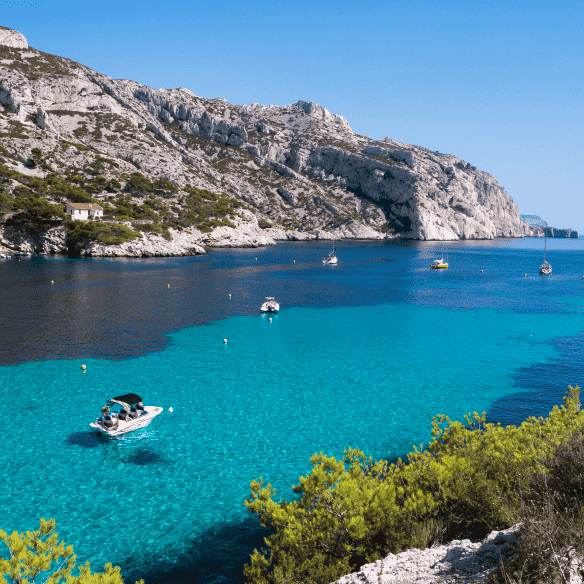
From Portbou, travellers can take a train over the French border to towns such as Banyuls-sur-Mer.
Sitting together on the bench parallel to Lylou and Lisa are 18-year-olds Greta and Mette, also from Germany. Six-weeks in to their zig-zagging around the United Kingdom, France, Spain and the Netherlands, Greta’s key takeaway is planning. Gone are the days of being blown around by the wind, she says. Booking in advance is key, at least in the summer anyway.
“We left one day after our prom,” says Greta. “We did a lot of hostels at first, which were cheaper, especially in the big cities, and now we’ve gone with a few AirBnbs.”
She said she enjoys the friendly nature of the hostels, but needed some alone time to recharge. “Either way, we found it really nice to have a chat here and there…to hear the life story from somebody from Australia or New Zealand, for example.”
The friends have maintained a giddiness few would expect of travellers so deep into their journey. It’s a testament to their friendship and their excitement about the world that’s infectious in the years when one leaves home.
“I thought after now I would be more exhausted and stressed out,” Greta says. “But the time just flew. And we’ve got the hang of the backpacks too. It’s not like you have to be like a ‘backpacker’ — this type of free-spirited traveller — we’re just normal people with things stuffed into our bags.”

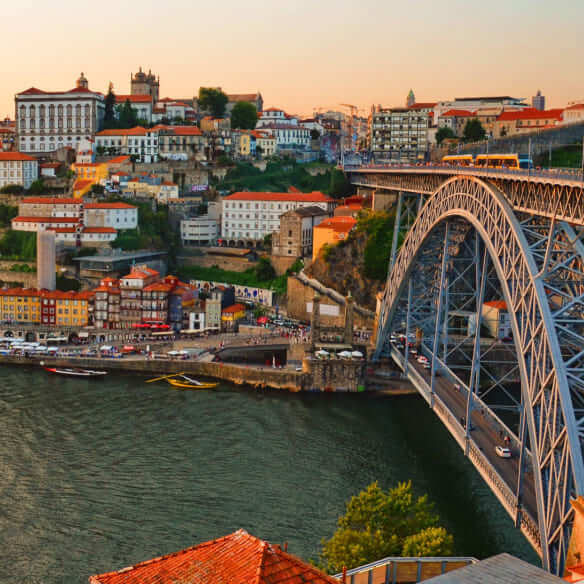
Paris and London are the most-visited cities in Europe, with 700,000 people reportedly passing through Gare du Nord each day.
She’s emphatic about the benefits of travelling, that continuing onto higher education from school isn’t for everyone and that big cities like Paris and London can inspire.
Her advice for budding Interrailers? “I think you have to make a plan. You have to book seat reservations [on some trains]…I would recommend to take some extra money for the seat reservations.”
She tells me a little about her plans after travelling, which are not yet set in stone. It’s this comfort with uncertainty that the most successful travellers have, from their life plans down to their train times to the exact contents of their bag.
There are all manner of backpacks at the station: a green one with battered runners dangling off, a black one with a single rose peeking out of a pocket, and a blue one with little flags pinned all over.
Along the bench from Greta and Mette, a small mound of bags signal a larger group, whom are only too happy to have a chat. School friends Ariene, Louise and Lois tell me that headphones and a little space have been their saving grace. To maintain a sense of sanity, busy days must be balanced with a bit of rest.

The Església de Santa Maria is visible from Portbou Station's train platforms.
They’re from Southampton in England, and we swap stories about our travels. Once again, there’s that instant connection between Interrailers; we’ve shared similar highs and the same travel chaos here and there.
The friends finished school this year and received their A-level results together in Venice. 40 minutes before they were due to receive their results, however, the power went out in the building where they were staying. They tell me they received their results in a nearby McDonalds and practically trip over each other to get the story out. It’s nice to see them laugh about it.
Despite some inevitable bumps in the road, they’re more than enthusiastic about Interrailing. “It’s made us grow up a lot,” says Ariene, adding that these bumps make the journey what it is.
Their highlight by far has been Lake Bled, in Slovenia, where one can find a picturesque church on a lake island surrounded by mountains. “We’d done a lot of cities before,” Ariene says, “so it was nice to have that break.” “It felt like everyone and their mum was in Rome,” one of her friends chimes in.
A church bell rings nearby. It’s two o’clock in the afternoon and the train to France is now a minute late. It’s no problem though; we’re not in any rush.



Meet the writer
Conor Capplis is an Irish journalist travelling Europe by rail.

Travel highlight
Hell might be other people, but without them travel is uneventful.
Along my travels I have encountered countless people who have animated days that, without their presence, would have remained rather flat: digital nomads escaping the banality of their lives back home; conservationists slow travelling on their way to save the world; and travellers who give off an intriguing combination of seeming a little lost, yet on the cusp of something special.
It's these people that characterise the journey, turning rainy days in a hostel into a tremendous marathon of card games I’ve never even heard of and make one feel a little more connected to the world.


Change of currency
You cannot change the currency once you have a Pass in your cart. Remove the Pass, and then change the currency on the website header.